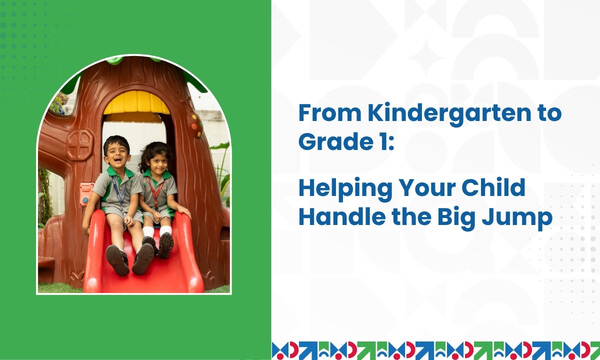
From Kindergarten to Grade 1: Helping Your Child Handle the Big Jump
The kindergarten to Grade 1 transition can feel like a bigger change for parents than it does for children. Until now, school may have been closely tied to play, familiar routines, familiar faces and learning through everyday experiences. Grade 1 brings a more structured school day, new expectations and a growing sense of independence.
It is natural for parents to wonder – Will they manage the longer day? Make friends? Follow instructions, organise their things and keep up with classroom work?
The good news is that UKG (or Pre-primary) to Class 1 preparation is less about teaching your child more and more about helping them become comfortable with what comes next.
What Changes When Your Child Moves to Grade 1?
The move from kindergarten to Grade 1 is not only a change of classroom. Children begin taking greater responsibility for their learning, following more structured routines and working with more independence than they may have experienced before.
In Grade 1, your child’s day will look a bit different from kindergarten. They’ll have:
- Longer time spent on lessons and less time moving from one play activity to another
- Separate subjects like English, Maths, EVS and languages, instead of learning through play corners
- Short periods where they work quietly on their own
- New routines such as morning assembly, taking turns as line monitors, using a homework diary and daily reading time
- More chances to work with classmates on group activities and projects
For parents, it helps to remember that readiness does not mean doing everything perfectly on day one. Children develop these skills gradually, with guidance and practice.
How Can Parents Help with UKG to Class 1 Preparation?
The best preparation usually begins at home, through small and familiar routines.
Encourage your child to get ready by themselves, pack their school bag on their own, and organise their belongings (bag, water bottle, notebooks) with increasing independence. Give them simple choices and responsibilities during the day. These everyday habits can make the transition to primary school feel less unfamiliar.
Build social confidence through everyday situations, such as greeting familiar adults, joining group activities and practising asking for help. These simple interactions help children feel more comfortable in a classroom community.
There’s no need to turn preparation into extra work. At this age, conversation, play, stories and everyday responsibilities can do much of the work.
Helping Your Child Adjust to Primary School
Children respond to change differently. Some are excited about becoming a “big kid”; others feel nervous about leaving a familiar teacher, classroom or friends.
Talk about the new things they may experience – a new teacher, different subjects and new friends. When they ask questions or share doubts, give clear answers instead of saying “don’t worry.”
It can also help to visit the new campus or classroom before the first day can help. Knowing where they will go, whom they can approach and what the school day may look like can make a new environment feel more familiar.
Avoid comparing your child’s readiness with another child’s. A child who takes a little longer to settle may just need more time and reassurance, and that is completely normal!
First Day of Grade 1 Tips for Parents
A calm start to the morning can make a lot of difference, so prepare school clothes, bags and other essentials the night before. Give your child enough time to get ready without rushing through breakfast or the journey to school.
Keep your goodbye warm and reassuring but avoid making it longer. If your child is anxious, acknowledge the feeling rather than making promises like “you won’t feel scared.” A simple reminder that their teacher is there to help can be more reassuring than any promise.
After school, give your child space to talk about the day in their own way. They may come home with a detailed story, or they may just say, “It was fine.” Both are normal. Maintain a consistent after-school routine, a snack, some downtime and a calm wind-down ritual before bedtime can help them process the day and feel secure.
What If Your Child Is Not Quite Ready Yet?
Parents often worry that their child should already be reading independently, writing fluently or completing advanced worksheets before entering Grade 1. In reality, children enter Grade 1 with varying levels of development. What matters most is their willingness to learn, communicate, participate and engage with new experiences.
Here’s a simple readiness checklist you can use:
- Can follow 2–3 step instructions in a group
- Can manage their own things like their bag, water bottle and notebook, even if they need a little reminder
- Sit and focus on a teacher-led activity for about 10–15 minutes
- Tell an adult when they need help or don’t understand something
- Shows curiosity and willingness to try new things
- Stay at school for a full day without a parent, even if they need some reassurance at first
- Know a few letters and numbers, enjoy listening to stories and can count objects, without needing to read or write fluently yet
Schools like CHIREC also have dedicated Learning Support teams who work with children who need a little more time to find their footing.
The transition works best when home and school understand where the child is starting from and offer consistent support as they move forward.
How CHIREC Supports the Kindergarten to Grade 1 Transition
At CHIREC, the move from the Early Years into primary school is part of a continuing learning journey. The focus is not only on preparing children for Grade 1 academics, but also on helping them feel comfortable with new routines and the primary school environment.
CHIREC’s Early Years Programme gives children a foundation built on learning through exploration, interaction and age-appropriate experiences. As children move into Primary Years, this foundation continues into a more structured learning experience.
For parents, this transition is also a time to understand the curriculum journey ahead. CHIREC offers CBSE and Cambridge pathways from Grade 1, depending on the campus. You can explore the Admissions Process to understand what the journey looks like for your family and read Your Child’s Journey for a broader view of how CHIREC approaches learning from the early years onward.
How to Enquire About Grade 1 Admission at CHIREC International School
Admissions for the 2027-28 academic year are now open for enquiries. If your child is completing kindergarten and you are beginning to think about Grade 1, this is a good time to understand what the transition will look like and how the right school can make it a positive one.
Learn how CHIREC’s Early Years team supports the transition to Grade 1 — Enquire Now