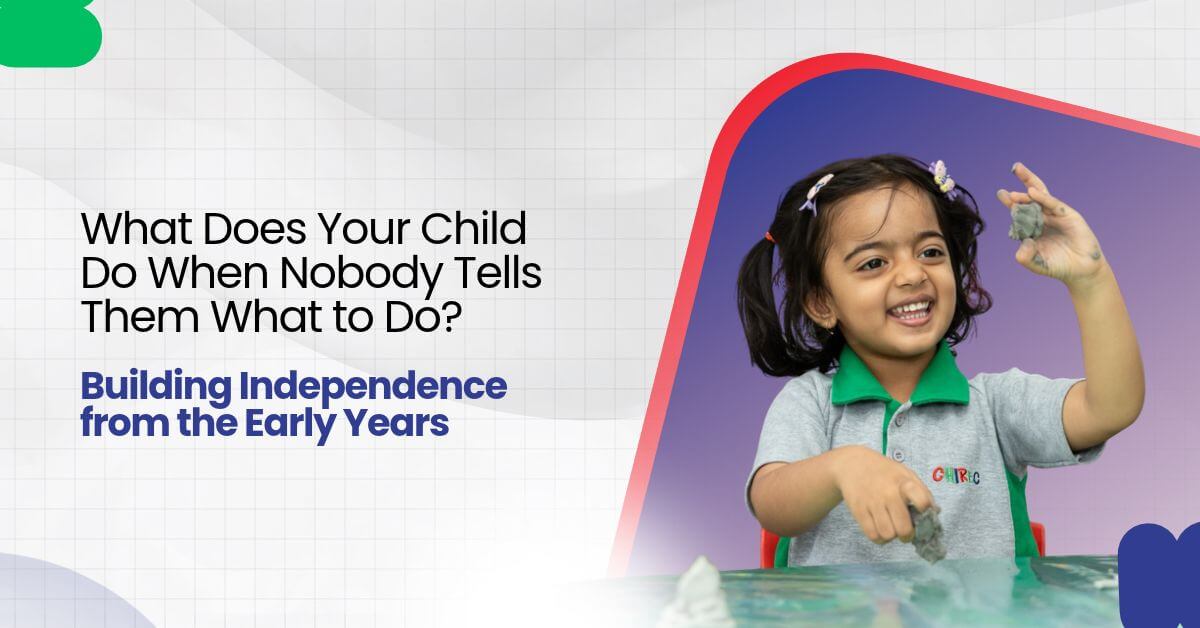
What Does Your Child Do When Nobody Tells Them What to Do? Building Independence from the Early Years
How everyday choices, play and classroom routines help preschool children become more independent.
A child finishes a drawing and looks around the classroom. The teacher is helping another student. There are a few minutes before the next activity begins.
What happens next?
One child might pick another activity. Another may put away the crayons and paper. Someone else may wait for the teacher to tell them what to do.
These small moments tell us a lot about how children are learning to manage everyday situations.
For parents preparing their child for Nursery or Pre-Primary, independence is often a concern. Will my child be able to look after their belongings? Will they ask for help when they need it? Can they follow a familiar routine without constant reminders?
Learning independence in preschool is a gradual process. It begins with simple choices, everyday tasks and opportunities to try things with some guidance from adults.
What Does Independence Mean for a Preschool Child?
Independence does not mean expecting a young child to manage everything alone. It means helping them become comfortable with age-suitable tasks, make simple decisions and take part in everyday routines.
For a Nursery child, this could mean choosing a toy, putting away building blocks or attempting to wear their shoes. An older Pre-Primary child may begin organising their belongings, following familiar classroom routines or completing an activity with no or some help taken.
Children develop these abilities at different rates. A child may confidently choose an activity but still need help opening a lunchbox or putting on a jacket.
Knowing when to ask for help is also part of becoming independent. Children need to feel comfortable approaching a parent or teacher when they feel something is unfamiliar or difficult.
Why Is Independence Important in Early Childhood?
Starting preschool introduces children to new people, routines and experiences. They begin spending time away from their familiar home environment, participating in group activities and managing small responsibilities.
Practising independence can help children become more comfortable with these changes. It gives them opportunities to:
- Build confidence: Attempt familiar tasks and recognise what they can do.
- Make decisions: Choose between activities, materials or simple options.
- Develop self-help skills: Manage belongings and take part in personal routines.
- Solve simple problems: Try a different approach when something does not work.
- Take responsibility: Put away toys, care for shared materials and follow familiar routines.
These abilities develop through regular practice. Children need opportunities to try, make mistakes and try again, with adults available to guide them.
How Does Play-Based Learning Help Children Become Independent?
Play gives children the freedom to make choices and see what happens when they act on them.
During a building activity, a child decides which blocks to use and how to arrange them. If the structure falls, they can try a different arrangement.
In pretend play, children take on roles, organise simple situations and interact with their friends. During art activities, they choose colours, explore materials and decide how to complete their work.
Teachers support these experiences by providing suitable activities, asking questions and allowing children time to explore rather than directing every step.
This is one reason play-based learning is important in preschool.
Children practise making decisions, communicating and working through small challenges while taking part in activities they enjoy.
How CHIREC Encourages Independence in the Pre-Primary Years
At CHIREC International School, the Pre-Primary Programme includes experiential learning activities that connect classroom experiences with situations children may encounter in everyday life.
For example, gardening activities give children opportunities to care for plants and observe how they change over time. They can take part in simple tasks and begin to understand that caring for something involves regular attention.
A visit to a fruit market allows children to observe different fruits, identify them and discuss familiar interactions in a real-world setting.
Through role-play activities, such as pretending to board an aeroplane, children become familiar with situations they may encounter outside school. They can practise communicating, following instructions and participating in a shared activity.
These experiences give children opportunities to observe, make choices and take part rather than just watch an adult complete each task.
How Can Parents Develop Independence in Preschoolers at Home?
Parents do not need to set up special activities to help children become independent. Everyday routines offer plenty of opportunities.
Let them try simple tasks.
Give your child time to put on their shoes, pack away toys or place their water bottle in their school bag before stepping in.
Offer two suitable choices.
Ask whether they would like to read one book or another or choose between two outfits. This gives them a chance to make decisions without feeling overwhelmed.
Allow time to work things out.
If a toy does not fit into a box or a puzzle piece does not seem to match, give your child a moment to try another approach before helping.
Give them small responsibilities.
They could return books to a shelf, put their shoes in the right place or help arrange their toys.
Recognise their effort.
Specific comments such as, “You remembered to put your water bottle away,” help children understand what they have managed to do.
Offer help when needed.
Encouraging independence does not mean expecting children to complete every task alone. They should know that asking for help is always okay.
Consistency matters more than expecting children to get everything right the first time.
What Should Parents Look for in a Preschool That Encourages Independence?
When visiting a preschool, look beyond the classroom décor and facilities. Pay attention to how children participate in everyday activities and how teachers guide them.
Here are a few questions you can ask:
- Are children encouraged to make simple choices during the day?
- Do they have opportunities to manage age-appropriate tasks?
- How are classroom routines introduced and practised?
- What do teachers do when a child finds an activity difficult?
- Are children given time to explore, or are they guided through every step?
- How does the school help children who are still settling into the routine?
A good early learning environment provides structure while giving children room to practise new skills at their own pace.
Experience CHIREC Through a Day of Play and Discovery
Deciding which preschool to choose for your child, is also about finding a place where your child feels happy and curious at the same time. And sometimes, the best way to understand a school is to experience it together.
Soon, CHIREC Jubilee Hills will be hosting The Little Explorers Picnic, a special family playdate for prospective Pre-Primary families.
Think nature hunts, creative activities, storytelling, music, movement games and plenty of little adventures for children to enjoy with their parents. Families will also get an opportunity to explore the campus, discover the learning spaces and interact with our Pre-Primary team.
Bring your little one along and get a glimpse of what learning, playing and growing at CHIREC can feel like.
The Little Explorers Picnic
A Day of Little Adventures at CHIREC
Keep an eye on our Instagram page for event announcements and registration details. We look forward to welcoming you and your little explorer to CHIREC Jubilee Hills!
Frequently Asked Questions
How can I develop independence in my preschooler?
Give your child opportunities to make simple choices, manage age-appropriate tasks and follow familiar routines. Activities such as putting away toys, organising belongings and attempting simple self-help tasks can help children practise independence. Offer guidance when needed.
What are some self-help skills for preschool children?
Self-help skills for preschoolers include putting on shoes, washing hands, organising belongings, eating with age-appropriate assistance, packing away toys and asking for help when needed. Children develop these skills at different rates.
At what age should a child start learning independence?
Children can begin practising simple independence skills during the toddler and preschool years. Tasks should match their age and abilities. Younger children may start with choosing a toy or putting away blocks, while older preschoolers may manage familiar routines with less assistance.
How does play-based learning develop independence?
Play-based learning allows children to choose activities, explore materials, make decisions and work through simple challenges. These experiences give them opportunities to practise initiative, communication and problem-solving.
How does CHIREC support independence in its Pre-Primary Programme?
CHIREC’s Pre-Primary Programme includes experiential learning, creative activities, role-play and real-life experiences. Activities such as gardening, fruit market visits and aeroplane role-play give children opportunities to participate, make choices and practise everyday skills.
Can parents visit CHIREC Jubilee Hills with their children to experience the Pre-Primary environment?
Yes. CHIREC will soon be hosting The Little Explorers Picnic, a family playdate for prospective Pre-Primary families at the Jubilee Hills campus. Children and parents can enjoy activities such as nature exploration, creative play, storytelling and movement games, while getting to know the campus and the Pre-Primary team. |
Keep an eye on CHIREC’s Instagram page for event dates and registration details.